Archons in Gnosticism are rulers or authorities associated with the lower heavens, the material order, fate, and the administration of a world cut off from knowledge of the highest Source. The name comes from the Greek word archōn, meaning ruler or authority.
They are not simply demons in a modern horror story, and ancient sources do not describe them in one uniform way. Their deeper significance lies in the kind of power they represent: authority that operates through ignorance, imitation, fear, and the claim that its limited order is all that exists.
Read the rulers in context
Three texts. Three different emphases.
“The Archons” are not a single fixed cast preserved in one creed. Compare how three surviving works use ruling powers before deciding what the symbol means.
- Nag Hammadi Codex II, tractate 4
The Hypostasis of the Archons
What it emphasizesThe rulers’ claim to authority is exposed as blindness, while revelation and resistance disclose a reality beyond their order.
Keep the boundaryDo not reduce the tractate to a catalog of hostile entities; it also retells Genesis and gives a prominent liberating role to the spiritual Eve and Norea.
Read the translation ↗ - Four Coptic copies, including Nag Hammadi Codices II, III, and IV
The Apocryphon of John
What it emphasizesA chief ruler and subordinate powers appear within an extended cosmology of creation, imitation, human formation, and awakening.
Keep the boundaryDo not treat every ruler as the chief Demiurge or detach the rulers from the larger story of the Invisible Spirit, Sophia, and the divine light in humanity.
Read the translation ↗ - Nag Hammadi Codex II, tractate 5, with additional witnesses
On the Origin of the World
What it emphasizesThe rulers belong to an elaborate account of cosmic origins, heavenly powers, Adam and Eve, fate, and the eventual undoing of arrogant rule.
Keep the boundaryDo not assume its sequence, names, or number of powers supplies one universal Gnostic system; the text has its own composite mythic architecture.
Read the translation ↗
Clear answers from a diverse tradition
Archons: meaning, number, sources, and symbolism.
These short answers preserve the differences among the surviving texts. Open the source lens above when you want the fuller comparison.
What does Archon mean in Gnosticism?
Archon comes from a Greek word meaning ruler or authority. In several Gnostic writings, Archons are powers that govern or administer the lower cosmic order while remaining ignorant of the highest divine Source.
Are the Archons and the Demiurge the same?
No. The Demiurge is usually the chief maker or ruler of the lower order, while the Archons are subordinate authorities within that order. The names, ranks, and relationships vary among surviving texts.
How many Archons are there?
There is no universal total. The Apocryphon of John describes twelve authorities, assigns seven kings to the heavens and five to the abyss, and also names a sevenfold group of powers. Other works arrange the rulers differently. Always identify the source and passage behind a list.
Which Gnostic texts describe the Archons?
Important surviving witnesses include The Hypostasis of the Archons, The Apocryphon of John, and On the Origin of the World. Each work gives the rulers a different emphasis within its larger story of creation, ignorance, and liberation.
Are Archons literal beings or spiritual symbols?
Ancient authors present them within mythic cosmologies, not merely as modern psychological metaphors. Contemporary readers may also interpret them as patterns of fear, domination, imitation, or captured attention, but that symbolic reading should be identified as a modern interpretation.
Why do some lists have seven Archons and others twelve?
In Frederik Wisse’s translation of The Apocryphon of John, Yaltabaoth brings forth twelve authorities and assigns seven kings to the heavens and five to the abyss. The text also gives a sevenfold list of powers. These are distinct groupings within one narrative, not a single interchangeable list.
When comparing names or counts, record the text, translation, and passage first. A seven-ruler diagram may describe one part of a source without exhausting its cosmology. Other Gnostic works arrange the rulers differently, so neither seven nor twelve is a universal total.
Rulers of the lower cosmic order
Texts such as The Hypostasis of the Archons and The Apocryphon of John place ruling powers beneath the divine Fullness. They belong to a structured cosmos of heavens, spheres, or authorities governed by a chief ruler often identified with the Demiurge.
Their number, names, and functions vary. Some accounts connect them with planetary spheres or the forces of fate; others emphasize their role in shaping the body, policing the world, or attempting to keep humanity unaware of its higher origin.
Archons and the Demiurge are related, not identical
The Demiurge is commonly the chief craftsman or ruler of the lower order. The Archons are subordinate authorities within that order. Treating every ruler as the Demiurge erases the hierarchy that the myths are trying to describe.
The distinction also clarifies the symbolism. A closed system rarely depends on one power alone. It is sustained by many administrators, habits, incentives, and voices that repeat the same limited vision until it feels like reality itself.
Ignorance is their defining weakness
The rulers can be formidable, but they are not omniscient. In several narratives their chief boasts that no god exists beyond him, only to be answered from a higher realm. The boast reveals blindness rather than ultimate sovereignty.
This is one of the most radical Gnostic ideas: domination may look absolute from inside its world while remaining profoundly ignorant of the life it cannot produce. The Archons can manipulate forms, but they do not own the divine light that makes recognition possible.
Are Archons literal beings or symbols?
Ancient writers often presented cosmology as real, not merely psychological. Modern readers nevertheless encounter the Archons on several levels: as mythic beings, structures of fate, social systems, compulsive patterns, or internalized voices that keep attention trapped in fear and imitation.
These readings do not have to cancel one another. A myth can make claims about the cosmos while also exposing patterns within consciousness. The responsible approach is to distinguish historical description from modern interpretation and avoid turning every difficulty or disagreement into evidence of an invisible enemy.
How Archonic power works inwardly
Archonic power narrows possibility. It says your inherited role is your final identity, the visible order is the whole of reality, and fear is the safest guide. It rewards repetition and discourages the direct knowledge that might reveal its limits.
The pattern can appear in shame, addiction, propaganda, spiritual authoritarianism, or any system that converts a partial truth into an unquestionable totality. What makes it archonic is not simply that it is unpleasant. It is that it thrives on forgetfulness and resists the return of living awareness.
The Gnostic response is remembrance
Gnostic liberation begins by remembering that the rulers are not the Source. The soul's deepest identity is not authored by the forces that condition it. Knowledge breaks the spell because it reveals both the mechanism of captivity and the light that captivity cannot explain.
In practice, this means learning to observe a controlling pattern without borrowing its voice. Name the fear, examine the claim, and ask what becomes possible when the system is no longer treated as ultimate. Remembrance is not paranoia. It is the steady recovery of attention, truth, and responsibility.
Sources & further reading
Return to the texts
Gnostic traditions are diverse. These primary-text and scholarly starting points help keep interpretation connected to the surviving sources.
Continue with the field manual
The Archon Playbook
The free guide above establishes what the surviving sources say. The Archon Playbook turns toward the present: fear, shame, urgency, distraction, captured attention, false light, and the small practices that help restore inner authority.
Ancient source study and contemporary application are kept distinct, so the practical reading does not pretend to be a translation of one ancient creed.
Available exclusively on Amazon in Kindle, paperback, and audiobook editions.
View every edition on Amazon ↗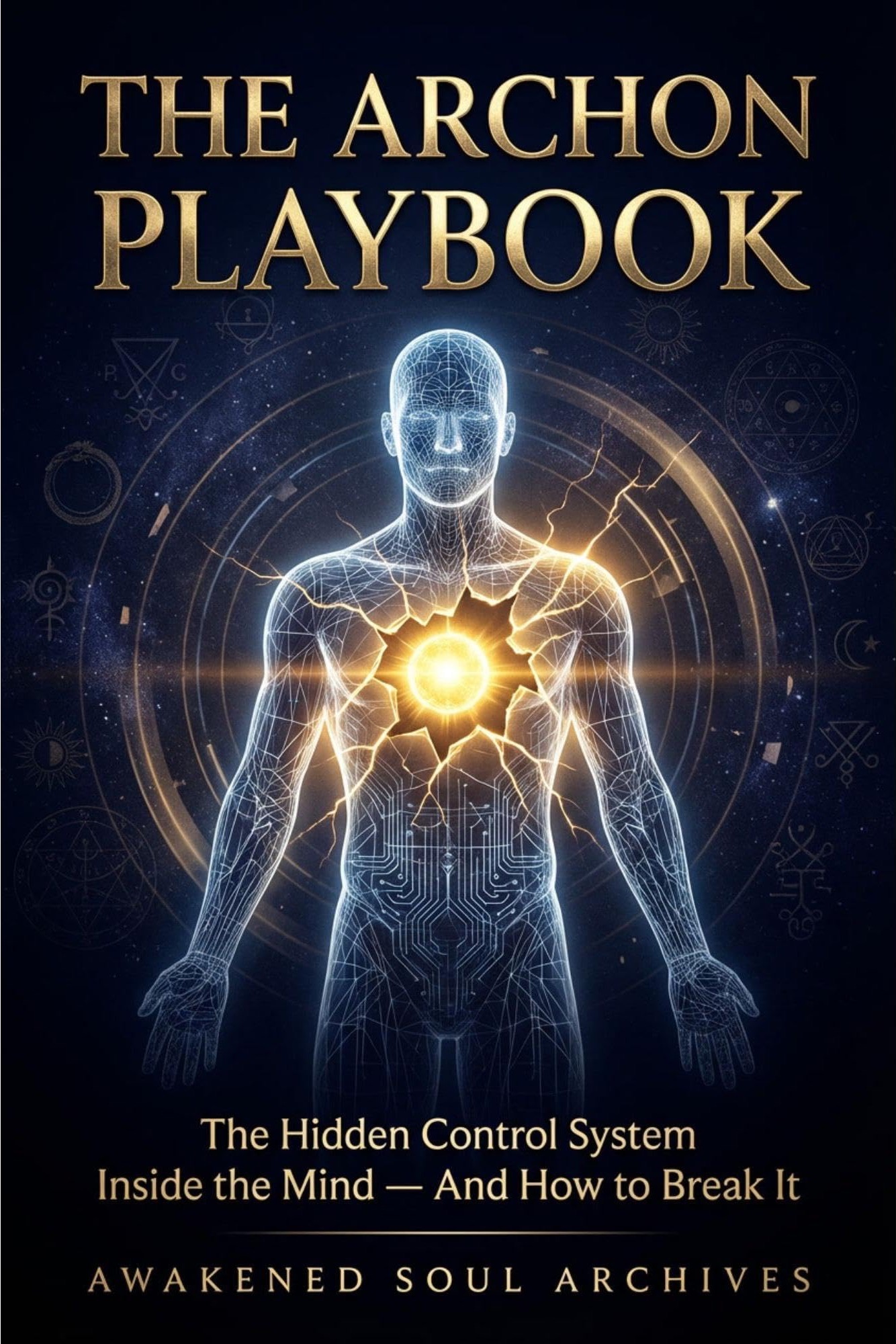 Kindle · Paperback · Audiobook
Pass the teaching onward
Know someone who would value this guide?
Share this page with a fellow seeker. Every thoughtful introduction helps these teachings reach the people searching for them.